
Where to Eat in Da Lat: What a Month in the Mountains Taught Me About This City's Food

Da Lat sits at 1,500 meters above sea level, and its food makes that altitude obvious. Strawberries, artichokes, asparagus, avocados, locally grown Arabica coffee — none of this grows in the lowlands. The French hill station left behind a colonial architecture and an agricultural microclimate that the Vietnamese population turned into something entirely their own.
After a month of eating there in a way that wasn't tourist-adjacent, here's what actually matters.
Breakfast: The Da Lat Version
Bánh Mì Xíu Mại — Da Lat's Signature Morning Dish
This isn't the bánh mì you know. Instead of a filled sandwich, Da Lat's version comes with a small bowl (chén) of pork meatballs braised in a light sweet-savory broth. You tear pieces of baguette and dip. It sounds minor until you're standing in a city at altitude on a cold foggy morning, and the broth does exactly what broth should do.
Sương Bánh Mì Xíu Mại, near the central market, is the consistent pick. Open from early morning, usually sold out by 10 AM. Cost: 15,000–20,000 VND (under $1). Order "xíu mại chén" if you want the bowl version with broth on the side.
Hot Soy Milk
Sữa Đậu Nành Dung Béo makes it from scratch — not powder. Plastic chairs spill out onto the sidewalk, vats simmer along one wall, and the mix of locals ranges from grandmothers to office workers grabbing breakfast before eight. Price: 15,000–25,000 VND per large cup.
This is what 6 AM in Da Lat feels like when done right.
The Central Market: 7–10 AM Only
Đà Lạt Market (Chợ Đà Lạt) has two realities: the tourist-facing entrance with colorful produce and strawberry vendors, and the eastern side entrance where you'll find small stalls serving rice porridge (cháo), local pho variations, and simple noodle soups at 30,000–50,000 VND ($1.20–2).
Go through the eastern side. Look for the women with the big pots. Sit down. Point. It works.
The Things Da Lat Does That Nowhere Else Does
Artichoke (Atisô) — in Every Form
The artichoke is Da Lat's culinary mascot. You'll encounter it as:
Artichoke tea (Trà Atisô) — dried flower brewed as a hot herbal tea, slightly bitter, warming. Every café in the city sells it for 15,000–30,000 VND. Good for digestion, great for cold mornings.
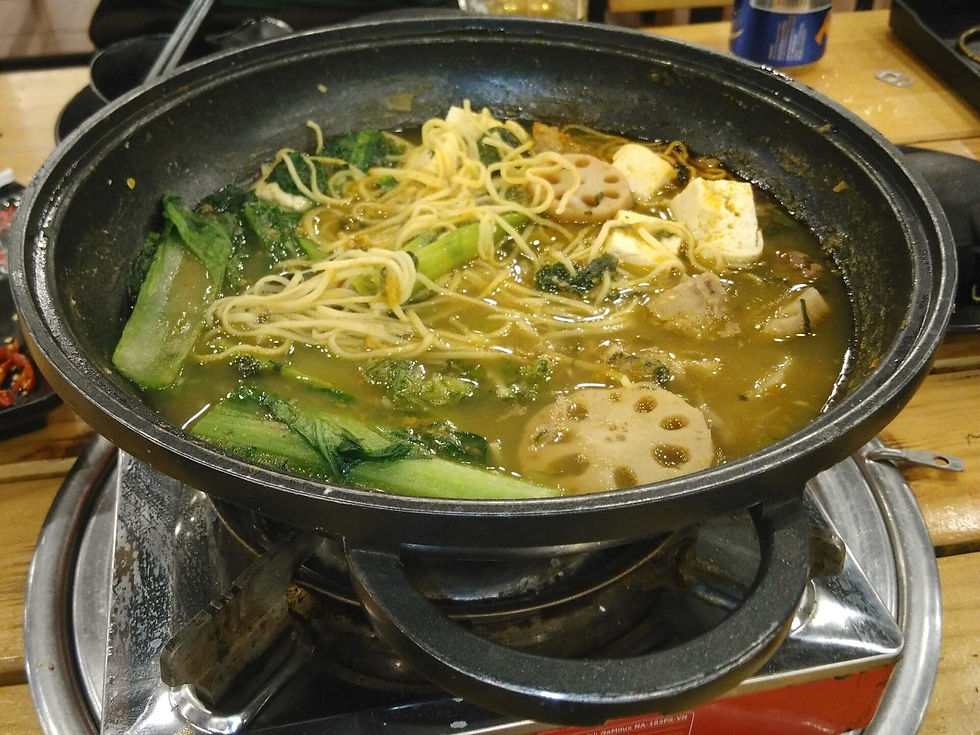
Artichoke hotpot — usually paired with beef, in a deep broth. This is the full version of the flavor.
Artichoke broth base — the foundation of many local soups.

Venison (Thịt Nai)
Wild deer from the surrounding forests, legally hunted. The meat here is milder and more tender than venison elsewhere — served stir-fried with peanuts and fresh herbs, or in mixed platters. Trong Dong Restaurant on Phan Dinh Phung Street specializes in it: 150,000–200,000 VND per person for a full plate.
Da Lat Sturgeon (Cá Tầm)
Cold mountain water + high altitude = conditions for freshwater sturgeon farming. You won't expect seafood in the mountains, but Da Lat's locally raised sturgeon is legitimate. White flesh, slightly fatty, usually served in a clay pot with local vegetables. Memory Restaurant does the version worth ordering: 200,000–300,000 VND per person.
Restaurants Worth Planning Around
Quan Xua
Down an alley, wooden furniture, no decor effort — the artichoke beef hotpot is the reason to go. Long-simmered broth, beef that falls apart, artichoke that absorbed everything around it. 120,000–180,000 VND per person including rice.
They also serve meats grilled on traditional red clay roof tiles (ngói đỏ) — a Da Lat-specific technique that preserves moisture differently than standard grilling.
Quan 33
29 Hai Bà Trưng Street. Table-top BBQ: marinated beef, local vegetables, fresh herb platters, and rice paper for wrapping. Better with three or four people. 200,000–280,000 VND ($8–11) for two with drinks.
Vegetarian in Da Lat: More Than You'd Expect
The altitude that makes Da Lat's food distinctive is the same thing that makes it work well for vegetarians. Tomatoes, spinach, broccoli, artichokes, asparagus — all grown locally, all substantially better than what you'll find in the lowland cities.

Buddhist Vegetarian Restaurants (Cơm Chay)
Unlike most Vietnamese cities where cơm chay restaurants operate only on specific Buddhist calendar days, Da Lat has them open daily. Full meal — soup, rice, several vegetable dishes — for 30,000–60,000 VND ($1.20–2.40). No signs in English, usually. Ask your café in the morning: "Cơm chay ở đâu?" and they'll point you.
Goc Ha Thanh
Serves dishes built around Da Lat's local produce — green curry with highland vegetables, mushrooms in butter, artichoke-based soups. A meal for two runs 150,000–220,000 VND ($6–9). Most dishes can have meat removed on request: "Không thịt" (no meat) works here without any drama.
Coffee Culture: This Is Where Vietnam's Best Coffee Comes From
The rest of Vietnam grows mostly Robusta — cheap, bitter, made for instant coffee. Da Lat grows Arabica. The difference is the altitude and the cool temperatures.

La Viet Coffee
Research-focused roaster working only with highland Arabica. Cold brew, espresso, and a signature cocktail menu using local tamarind, mulberry, and passionfruit. 45,000–80,000 VND per cup. Strong Wi-Fi, open late.
BicycleUp
Tiny hole-in-the-wall serving La Viet beans with an interior covered in old books and vintage collectibles. Two tables, maximum. That's the point. 35,000–55,000 VND.
Artichoke Tea and What Else to Drink
Trà Atisô (artichoke tea) is available everywhere, costs almost nothing, and is what the locals drink on cold evenings. 15,000–30,000 VND.
Sinh Tố Bơ (avocado smoothie) is a Da Lat signature that shouldn't be skipped. Blended fresh avocado, sweetened condensed milk, crushed ice. 35,000–50,000 VND at the night market.
The Special Experience: High Tea at the Palace
Dalat Palace Heritage Hotel | 2 Tran Phu, Ward 3 | ~$25–35 per person | Book ahead

Built in 1922, the Dalat Palace looks like a French hotel was carefully removed from a Paris neighborhood and installed here. The afternoon tea service in the main salon — tiered tray of pastries and small sandwiches, pots of tea poured into antique china — is worth doing once. Not cheap. Genuinely atmospheric.
The building is cool inside. Bring a layer. Book at least a day ahead.
The Night Market: Hoa Binh Square (6–11 PM)
After dark, central Da Lat turns into one long lane of charcoal smoke and conversation. The night market spreads from Hoa Binh Square down several surrounding streets.
What to focus on:
Bánh tráng nướng — grilled rice paper with quail egg, green onion, dried shrimp, and minced pork. The "Da Lat pizza" label has stuck because it's mostly accurate. At the north end of the market, look for the older woman cooking on an open grill to order — there's a reason for the short line.
Hot soy milk — again, here too, in the evening.
Avocado smoothie — the market version is blended to order with ice crush. Around 35,000–50,000 VND.
Roasted chestnuts — 20,000 VND a bag. More tourist than local at this point, but still good.

FAQ
How much does food cost in Da Lat?
Morning: $0.60–2. Local lunch: $2–5 per person. Dinner with Highland specialties: $6–12 per person. Overall cheaper than HCMC because so much produce is grown locally.
Are there good options for vegetarians?
More than you'd expect. The local agricultural output is strong on vegetables, Buddhist vegetarian restaurants operate daily, and most local spots will drop the meat on request.
What food should I bring home from Da Lat?
Dried artichoke tea (30,000–80,000 VND per bag at the central market), locally roasted Arabica coffee from La Viet, and strawberry jam from the farms if you can find it fresh-made. All available at the central market.
Is there seafood in Da Lat?
Not coastal seafood — it's a mountain city. The local answer is freshwater sturgeon (cá tầm) farmed in cold mountain water. For actual seafood, you'd need to head down to Nha Trang.
What's the best meal to prioritize if I only have one day?
Morning: bánh mì xíu mại near the market. Lunch: artichoke hotpot at Quan Xua. Afternoon: artichoke tea + avocado smoothie. Evening: bánh tráng nướng at Hoa Binh Night Market. That's a day of eating that's entirely Da Lat-specific.
After a month of eating in Da Lat, the thing that stayed with me isn't a specific restaurant or dish. It's the realization that altitude is the real ingredient. The cold, the cloud cover, the highland soil — they created a food culture that grew inward rather than importing from outside. Everything you eat there has a short journey from ground to table.
That's not something you can photograph for Instagram. But it's the reason the food stays with you.

🗺️ My Da Lat Map - Available Now!
After weeks of searching, testing, and documenting every place in Da Lat – the ultimate map is finally here!
This isn't just another list from Google. It's a real experience map that includes only the places that are truly worth it – where locals eat, work, and enjoy themselves.
What you'll find in the map:
☕ Perfect cafes for digital nomads
🍜 Restaurants and street food stalls that locals love
💎 Hidden attractions (not tourist traps)
🏛️ Highlights worth seeing (and which to skip)
💆 High-quality spas and massages
🌙 Nightlife – bars, jazz clubs and live music
📍 All the little tips that save time and money
The map includes dozens of places I personally tested, with detailed notes about each one – what's special, when to go, and how much it costs.
💡 Need Help Planning Your Itinerary?
If you feel you want something more personal – a custom itinerary tailored just for you, with recommendations that fit exactly your travel style and budget – I'm here for you!
I offer personal consultation and custom itinerary planning for people who want to travel smart, save time, and avoid costly mistakes.
Enjoy your Da Lat vacation,
Maya 🧡
Read More About Vietnam:
🛏️ Where to Stay in Nha Trang: A Neighborhood and Hotel Guide That Picks the Right Side of the Street


Comments